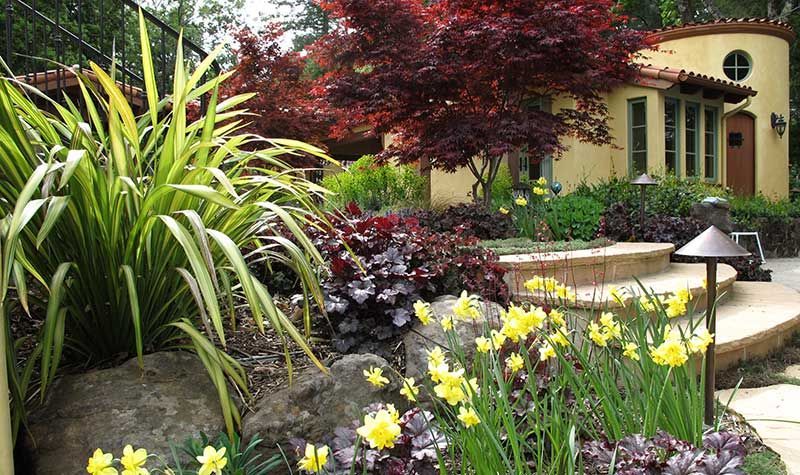
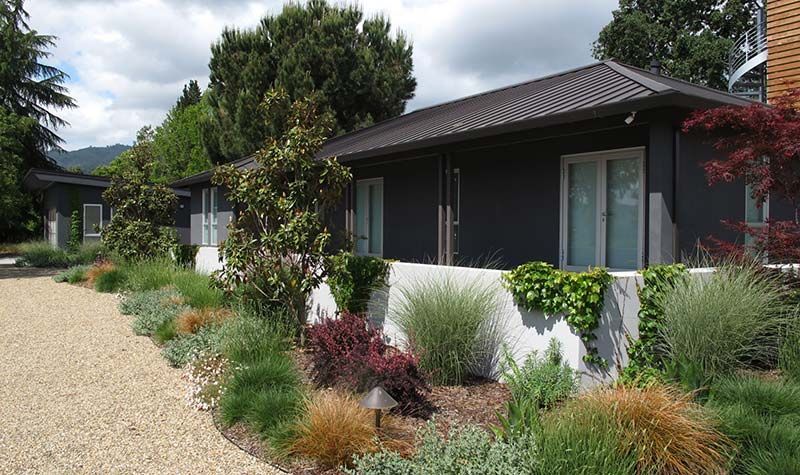
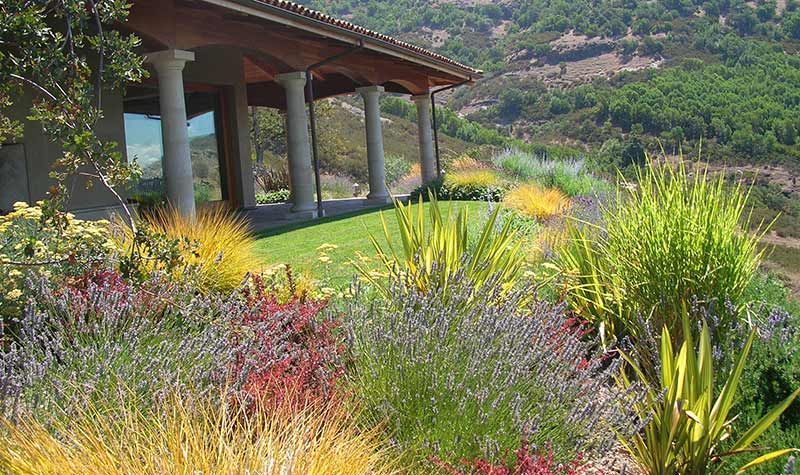
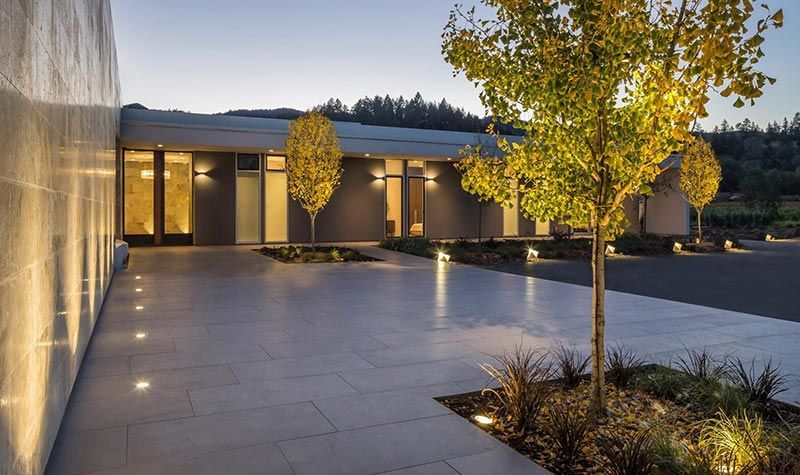
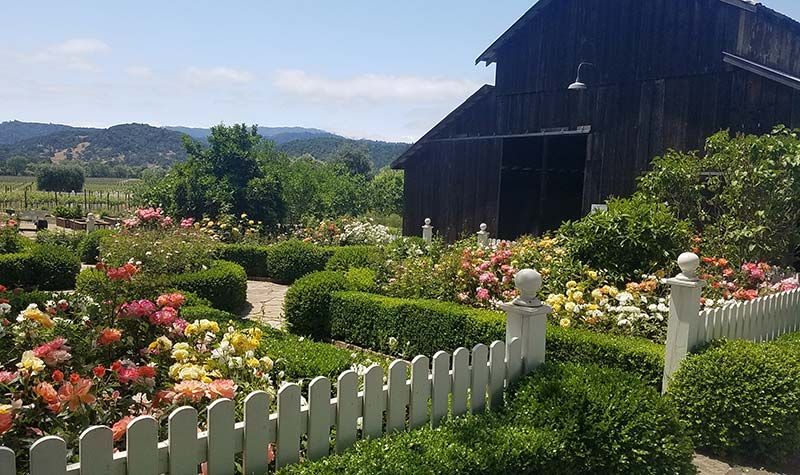
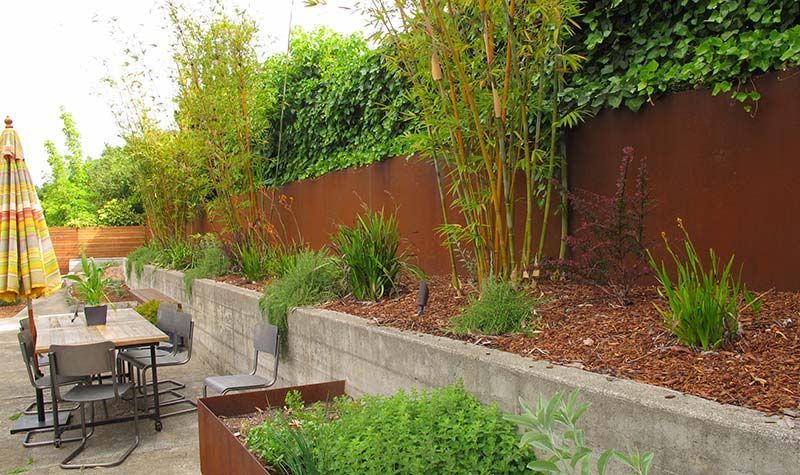
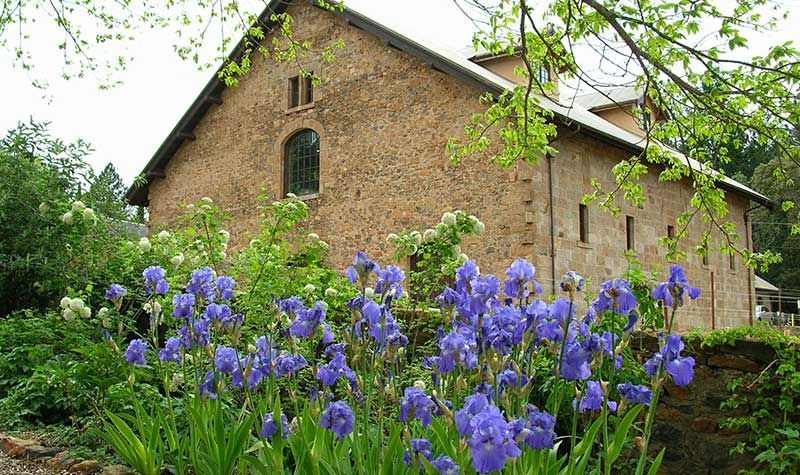
Napa Valley properties face design challenges that make hiring the right landscape design service especially important. Hot, dry summers, clay-heavy soils, fire risk, and regional water conservation requirements mean a design that works in Sacramento may not hold up here. A landscape design service in St. Helena, CA, must account for all of these factors from the first site visit.
What Does a Full-Scope Landscape Design Service Include?
A full-scope service typically covers four phases: site analysis, concept planning, a detailed planting plan, and construction documents.
Site Analysis: The designer walks the property to assess sun exposure, soil type, drainage, existing plants, and access points. In Napa Valley, this often includes evaluating slope and erosion risk on hillside parcels near Angwin or the eastern benchland above St. Helena.
Concept Plan: The designer presents a broad layout showing proposed zones such as lawn areas, planting beds, hardscape, and outdoor living spaces. This is where you share your goals and the designer shapes a coherent vision.
Planting Plan: A detailed plant list is developed based on site conditions. Designers in this region often favor drought-tolerant California natives, Mediterranean species, or low-water ornamentals suited to the valley's long dry season.
Construction Documents: Final drawings guide the installation crew and, where required, must comply with applicable water efficiency standards.
How Does the Napa Valley Climate Shape Design Decisions?
The local climate drives every major design choice. Napa Valley's Mediterranean pattern brings cool, wet winters and dry summers, and nearly half of treated drinking water in the region is used outdoors. A qualified designer builds irrigation efficiency into the plan from the start.
Plant selection is also shaped by fire risk. Designers working near St. Helena, Calistoga, and surrounding hillside communities apply defensible space principles to guide how plantings are positioned near structures. Combustible species close to buildings are avoided in favor of lower-risk alternatives.
Soil conditions add further complexity. Napa Valley soils can be clay-heavy and shift between wet and dry seasons, putting stress on hardscape surfaces and requiring careful planning for patios, walkways, and retaining walls.
What Should You Ask Before Hiring a Landscape Designer?
- How familiar are you with St. Helena and the surrounding Napa Valley area?
- Do you handle both design and installation, or do you refer out?
- How do you address water conservation in your planting and irrigation plans?
- Can you provide references or portfolio examples from similar regional properties?
- What is your process from first consultation through completed installation?
How to Evaluate a Designer's Credentials and Experience
Look for demonstrable local experience above all else. A designer who has worked on estate properties, winery grounds, or residential parcels in the Napa Valley corridor will have practical knowledge of local soils, microclimates, and permit processes that a newcomer may lack.
A track record of completed projects across residential estates and commercial properties such as wineries or tasting rooms signals the team can manage the full scope of a complex landscape project.
Start Your Napa Valley Landscape Project
Autumn Skies Landscapes brings over 30 years of design and installation experience to properties throughout St. Helena, CA, Calistoga, Yountville, Angwin, and surrounding Napa Valley communities.
Reach out to schedule a consultation or call
(707) 965-1363 to get started. You can also find the team on Google:
Autumn Skies Landscapes.